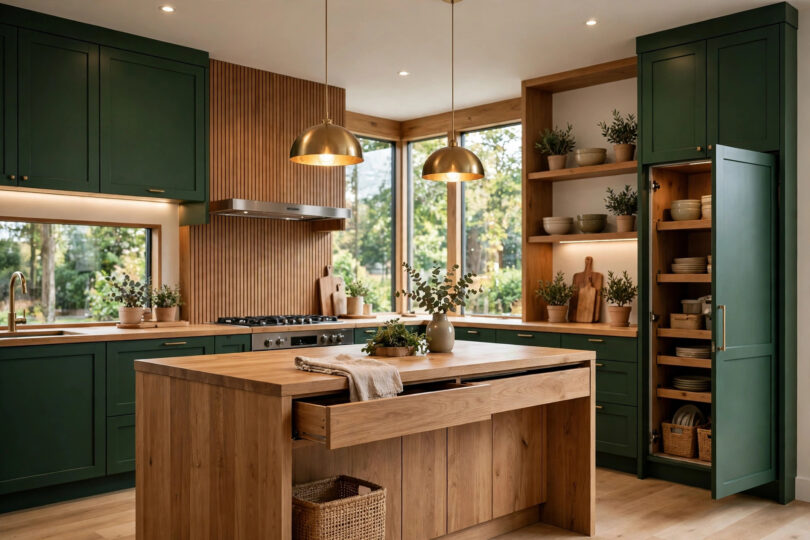

The Problem Is Not the Size of Your Kitchen
Small kitchens are accused of being too small, but spend a week cooking in one and a different diagnosis emerges: things live in the wrong places. The spices are far from the stove, the pan lids are in a pile behind the bowls, and the appliance you use daily is stored like a museum piece while the one you use yearly owns prime counter. Good kitchen organisation ideas fix the geography, not the square footage — and a well-mapped small kitchen outperforms a sprawling unplanned one every single day.
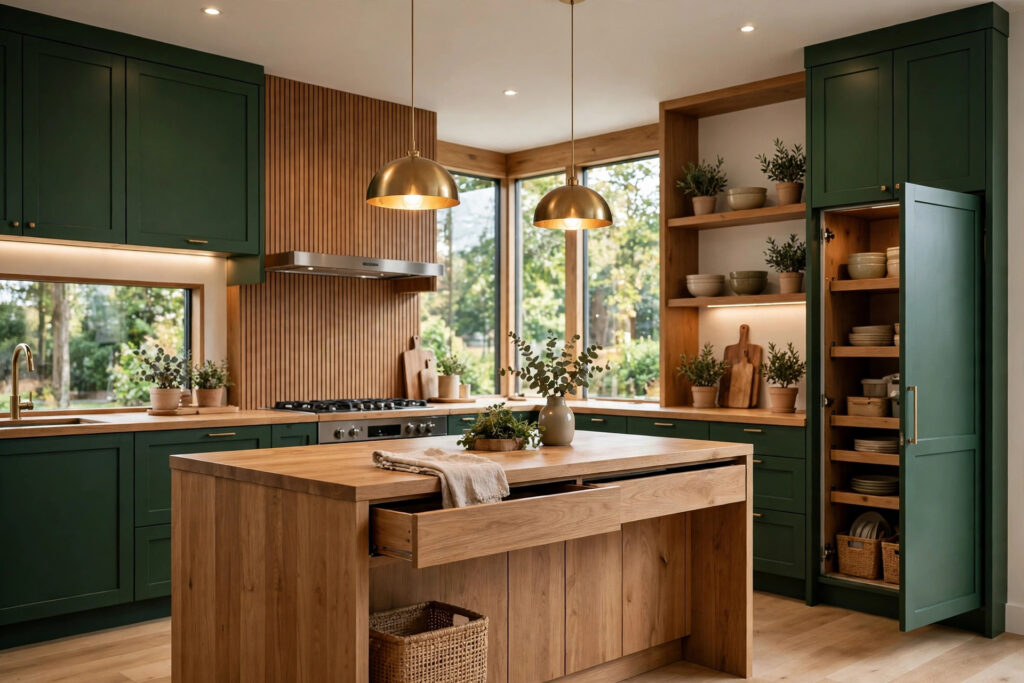
This guide reorganises a small kitchen by zones, then squeezes storage out of the spaces most kitchens waste.
Think in Zones, Not Cupboards
Professional kitchens are laid out by task, and homes should steal the idea. Define four zones by where the work happens. Prep zone (the main counter stretch): knives, boards, mixing bowls, and the oil and salt you reach for mid-recipe. Cooking zone (around the stove and oven): pans, lids, utensils, spices, oven gloves — everything within one step of the heat. Cleaning zone (the sink and dishwasher): washing supplies, towels, the drying rack, bins below. Storage zone (fridge and pantry shelves): food grouped by type, with the everyday items at eye level.
Now the ruthless part: evict everything that does not belong to its zone. The slow cooker migrates out of the prep zone to a high shelf. The serving platters you use twice a year leave the cooking zone for the top cupboard. Zone discipline feels strict for a week and then invisible — because cooking stops involving the little hunts and digs that used to punctuate it.
Win Back the Wasted Spaces
Small kitchens are full of storage pretending to be nothing. The inside of cupboard doors takes slim racks for spices, wraps, and lids. The dead space above cabinets holds the seasonal and ceremonial items in labelled boxes. The gap beside the fridge fits a slim rolling trolley for bottles and jars. Wall space takes a rail with hooks for the utensils and pans you use daily — freeing a whole drawer — and a magnetic strip for knives, which is safer and faster than the knife-block or the dreaded loose drawer.
Inside the cabinets, think vertically: shelf risers double a shelf’s useful surface, pan dividers file lids and trays upright instead of stacked, and clear containers for staples end the archaeology of half-open packets. None of this requires renovation money — it is the same instinct as the budget home decor ideas that make a room look considered: the expense is attention, not cash. And while you upgrade the kitchen’s systems, remember the invisible one behind the walls — the heating and cooling discipline in smart thermostat benefits matters in a kitchen that an oven can push five degrees past comfortable in twenty minutes.
The Daily Reset That Keeps It Working
Organisation is not an event; it is a small recurring act. The kitchens that stay organised share one habit: a five-minute reset after the evening meal — surfaces cleared and wiped, everything back in its zone, tomorrow’s first items staged. Five minutes daily is cheaper than the monthly Saturday lost to a full excavation, and it is the difference between a system and a photograph.
Support it with one-in-one-out for gadgets and a twice-yearly honest audit of the storage zone: expired spices, the duplicate peeler, the appliance whose last use nobody can date. Small kitchens cannot afford museum pieces, and every eviction is space returned to the cooking you actually do.
Make It Yours, Not a Showroom
A final caution against over-organising: a kitchen arranged for photographs rather than cooks becomes a chore to use and a guilt machine when real life happens in it. Leave the fruit bowl on the counter if your family actually eats from it. Keep the ugly beloved mug. The goal is a kitchen where everything you use is findable in seconds and everything you see earns its place — ordered enough to be calm, lived-in enough to be yours.
Small Kitchens With Big Families: The Indian-Home Edition
Kitchens that feed joint families or host festival cooking face the zone test under pressure, and a few additions earn their place. A dedicated masala station — a spice box or a shallow drawer insert right at the cooking zone — ends the festival-day treasure hunt. Bulk staples (rice, atta, dals) belong in large, identical, labelled containers in the storage zone’s lowest, strongest shelf, decanted into small daily-use jars at the prep zone, so the heavy lifting happens weekly rather than daily. And a folding or rolling extra work surface, parked against a wall and deployed on big cooking days, gives the small kitchen an elastic capacity that fixed layouts cannot.
The principle underneath is respect for the cook: in a home where the kitchen produces three meals and a festival calendar, organisation is not aesthetics — it is the difference between cooking as labour and cooking as the pleasure it is supposed to be.
Start with the cooking zone if a full reorganisation feels like too much for one weekend. It is the zone your hands visit most, it takes an hour to fix, and its improvement is felt at the very next meal — the quickest possible proof that the system works, and the motivation to finish the other three zones the following weekend.
The Bottom Line
Kitchen organisation ideas that last are geographical, not decorative: four zones mapped to the work, every item living in its zone, wasted spaces — doors, walls, gaps, cabinet tops — recruited for storage, and a five-minute daily reset holding the line. Do it once, properly, and the small kitchen stops feeling like a compromise and starts cooking like it was designed, because finally it was.