
Refreshing your home does not have to mean draining your savings or hiring an expensive designer. With a little creativity and a clear plan, budget home decor ideas can completely change how a room looks and feels, often for less than the cost of a single new piece of furniture. The secret is knowing where small changes make the biggest visual impact: colour, lighting, textiles and arrangement. This guide walks you through practical, affordable upgrades that work in real homes, room by room, so you can enjoy a space that feels polished, personal and welcoming without overspending.
Start With a Plan, Not a Shopping Trip
The most common budget mistake is buying random decorative items because they look appealing in the store, then discovering they do not fit your space, your colours or your lifestyle. Before spending anything, walk through each room and write down what bothers you most. Is the lighting flat? Are the walls bare? Does the furniture arrangement feel cramped? A short priority list keeps your spending focused on changes that genuinely improve the room.
Set a Small Budget for Each Room
Decide how much you can spend per room and stick to it. When money is limited, it is better to finish one room properly than to scatter small purchases across the whole house. A completed room gives you a satisfying result and teaches you what works, so your next room becomes easier and cheaper to tackle.
Shop Your Own Home First
Before buying anything new, look at what you already own. A side table gathering dust in the bedroom might be perfect beside the living room sofa. Artwork, vases, baskets and lamps moved between rooms can make familiar pieces feel brand new. Many of the most effective budget home decor ideas cost nothing at all; they simply involve seeing your existing belongings with fresh eyes.
Paint: The Cheapest Big Transformation
No single change transforms a room faster or more cheaply than paint. A fresh coat in a lighter shade instantly makes a space feel cleaner, brighter and larger. If painting all four walls feels like too much, try a single accent wall behind the sofa or bed. Deep green, warm terracotta and soft navy are popular choices that add character without overwhelming the room.
You can also use paint creatively on furniture. An old wooden cabinet, a plain bookshelf or a set of mismatched chairs can look like a coordinated collection once they share the same colour. Tester pots are inexpensive and ideal for these small projects. If you are planning a bigger style direction for your home, the ideas in this overview of luxury interior ideas can be adapted at a fraction of the cost simply by copying the colour combinations and styling tricks rather than the expensive pieces themselves.
Lighting That Makes Everything Look Better
Poor lighting can make even a beautifully decorated room feel dull. Most homes rely on a single harsh ceiling light, which flattens colours and creates unflattering shadows. Layering your lighting is one of the smartest budget home decor ideas because it changes the mood of a room instantly.
- Add a second light source: a floor lamp or table lamp in a dark corner removes the flat, shadowy look of overhead-only lighting.
- Choose warm bulbs: warm white light makes rooms feel cosy and welcoming, while cool white light can feel clinical.
- Use lampshades to soften glare: an inexpensive fabric shade can make a basic lamp look far more elegant.
- Highlight what you love: a small spotlight or LED strip under a shelf draws the eye to books, plants or artwork.
Second-hand lamps are easy to find and simple to refresh with a new shade or a coat of spray paint. Candles and fairy lights are another low-cost way to add warmth in the evening, especially in living rooms and bedrooms.
Textiles: Softness, Colour and Pattern for Less
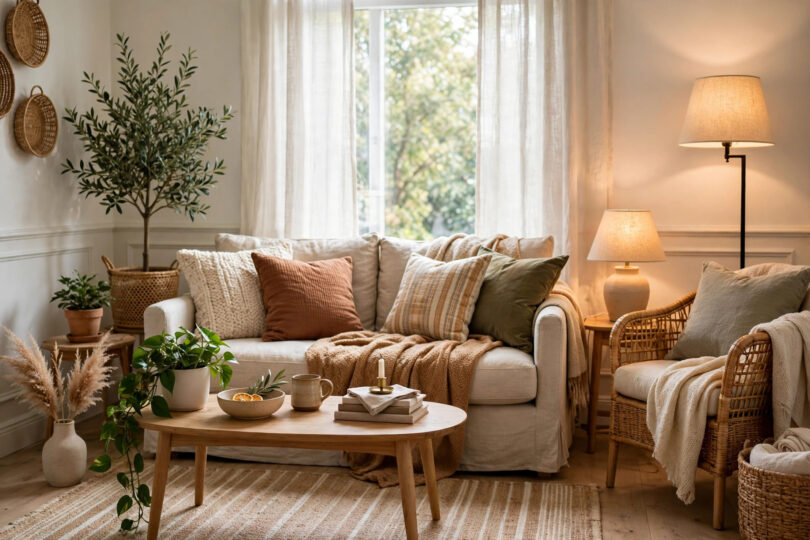
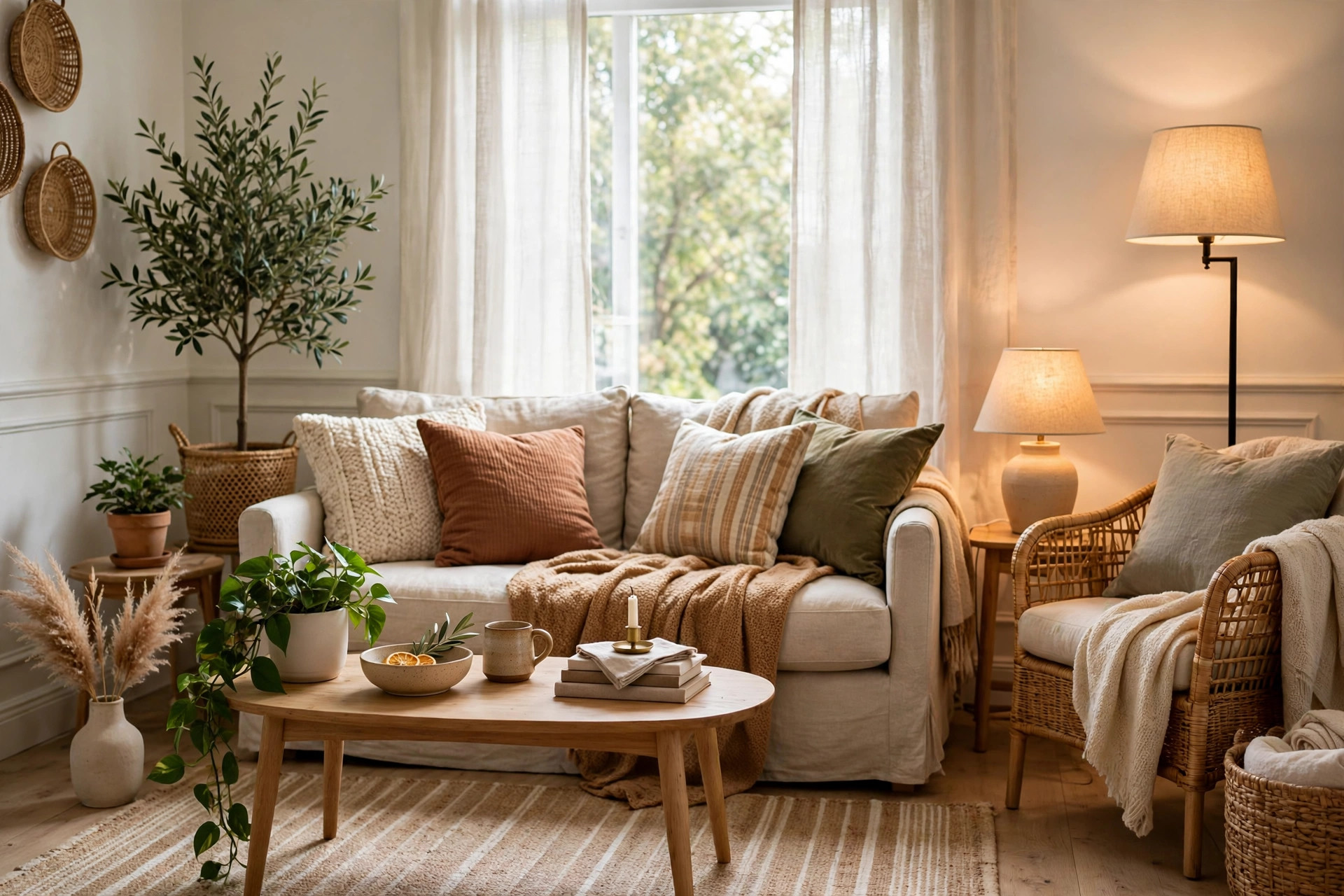
Cushions, curtains, throws and rugs are the hardest-working tools in a decorator’s kit, and they are far cheaper than furniture. Changing cushion covers is the fastest way to update a sofa; choose two or three colours that pick up tones from your artwork or rug so the room feels coordinated. A throw blanket draped over an armchair adds texture and makes the seating area feel inviting.
Rugs That Define the Space
A rug anchors a seating area and adds warmth underfoot. If a large rug is beyond your budget, layer a smaller patterned rug over an inexpensive natural-fibre base rug for a designer look at a much lower price. In bedrooms, even simple runners on either side of the bed make mornings more comfortable and the room more finished.
Curtains Hung High and Wide
How you hang curtains matters as much as the fabric. Mounting the curtain rod close to the ceiling and wider than the window makes windows look bigger and ceilings taller. Light, flowing fabrics keep small rooms airy, and they are usually among the most affordable options in any home store.
Arrange What You Have Like a Designer
Professional-looking rooms are rarely about expensive objects; they are about thoughtful arrangement. Pull furniture slightly away from the walls to create breathing space, group decorative items in odd numbers such as threes and fives, and vary heights so the eye travels around the room. A stack of books with a small plant on top, a framed picture leaning on a shelf, or a tray that gathers remotes and coasters into one tidy group all create that styled feeling for free.
Decluttering is part of the arrangement. Clear surfaces make a room feel calmer and more spacious, and storage baskets are an inexpensive way to hide everyday clutter. If you are exploring a new direction for your home overall, these modern interior design trends show which looks are current right now, and many of them, like warm minimalism and natural materials, are easy to recreate on a small budget.
Bring Your Walls to Life
Bare walls make rooms feel unfinished. Filling them does not require original art. Frame pages from old calendars or coffee-table books, create a gallery wall from family photos in matching inexpensive frames, or hang a large mirror to reflect light and make the room feel bigger. Woven baskets, decorative plates and even a beautiful piece of fabric in a frame can all become wall art.
Plants deserve a special mention among budget home decor ideas. A single healthy plant adds life, colour and texture to any corner, and many varieties, such as pothos and snake plants, are cheap, hardy and easy to propagate, so one plant can become several over time. Grouping plants at different heights on a stool, a shelf and the floor creates the lush, layered look that makes interiors feel rich.
Small Upgrades With an Outsized Effect
Sometimes the details you touch every day matter most. Swapping old cabinet handles, light switch covers or door knobs for modern ones takes minutes and makes kitchens and bathrooms feel updated. Peel-and-stick tiles or wallpaper can refresh a kitchen splashback or an entryway without renovation. A new shower curtain, matching towels and a simple bath mat can make a tired bathroom feel like a boutique hotel.
Putting It All Together
The best budget home decor ideas share one principle: spend on impact, not on objects. Plan first, reuse what you own, let paint and lighting do the heavy lifting, and add textiles and greenery for warmth and colour. Work room by room, and take a photograph when you finish each one; seeing your progress keeps you motivated and helps you spot what the next room needs. With patience and a modest budget, your home can look like the expensive version of itself, and every change will feel personal because you chose it with care.