
A compact living room does not have to feel cramped, dark or cluttered. In fact, some of the most inviting homes have the smallest sitting rooms, because every choice in them is deliberate. The best small living room ideas are not about buying special miniature furniture; they are about layout, light, colour and scale, the same principles designers use in rooms of any size. Whether you are furnishing a studio flat, a modest family home or a narrow terrace lounge, this guide shares practical small living room ideas that make the space feel bigger, brighter and far more comfortable to live in.
Plan the Layout Before Anything Else
Layout is the foundation of every successful small room. Start by identifying the focal point, usually a fireplace, a window or the television, and arrange seating around it. Keep walkways clear: you should be able to cross the room without squeezing past furniture or turning sideways. If you currently push everything against the walls, try pulling the sofa slightly forward and placing a slim console or a plant behind it; counter-intuitively, this often makes the room feel larger because it creates depth.
Measure, Then Choose Furniture
In a small room, a sofa that is even twenty centimetres too deep can dominate the space. Measure your room carefully, including door swings and radiator positions, and take the measurements with you when shopping. Furniture with legs that lift it off the floor lets light flow underneath and makes the floor area feel bigger. Glass or acrylic side tables serve the same purpose because you can see through them.
Choose Furniture That Works Twice as Hard
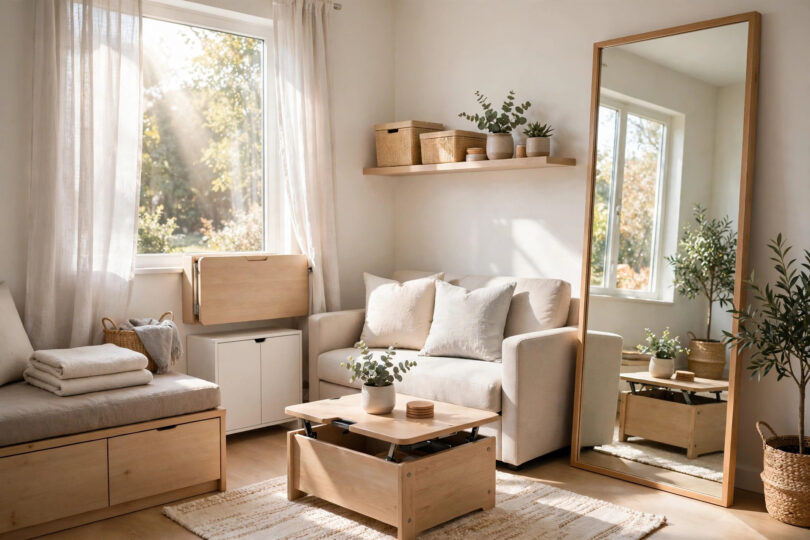
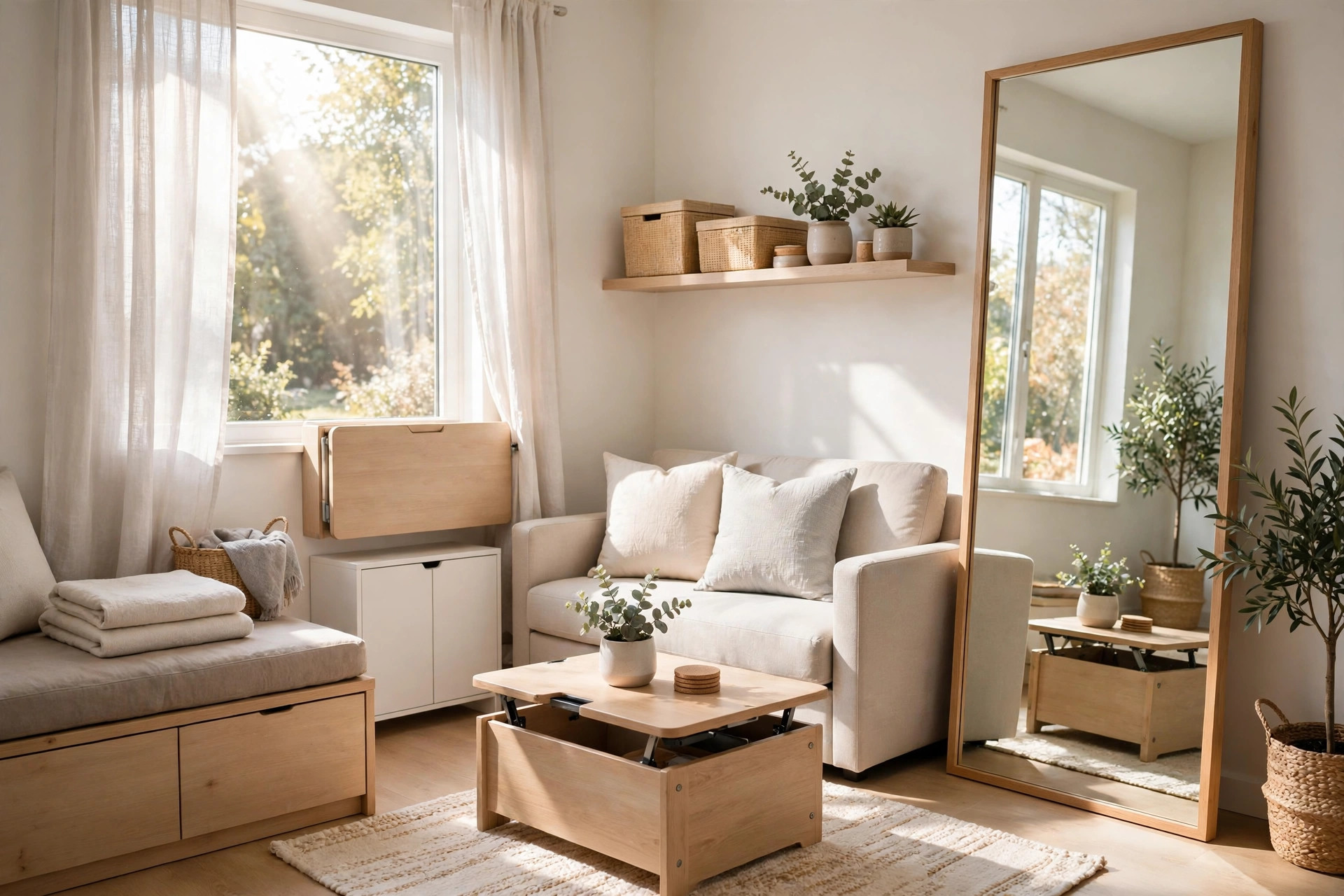
Multi-functional pieces are the backbone of smart small living room ideas. A storage ottoman can be a footrest, extra seating and a home for blankets and magazines all at once. Nesting tables provide surface space when guests arrive and tuck away afterwards. A daybed or a good-quality sofa bed turns the living room into a guest room when needed, and wall-mounted drop-leaf tables can serve as a desk or dining spot in studio spaces.
- Armless or low-arm seating: lower profiles keep sight lines open and make ceilings feel higher.
- A compact loveseat plus one chair: often fits a small room better and feels lighter than a bulky three-seater.
- Slimline storage: shallow bookcases and wall-hung cabinets keep essentials organised without eating floor space.
- Lightweight pieces: furniture you can move easily lets the room adapt for guests, exercise or play.
Use Colour and Light to Open the Room Up
Light colours reflect light and visually push the walls outwards, which is why pale shades are a classic choice for compact rooms. You do not have to settle for plain white: soft warm neutrals, pale sage, powder blue and blush all keep the airy feel while adding personality. Painting the ceiling a shade lighter than the walls also draws the eye upward.
That said, a small room can absolutely handle a deep, dramatic colour if it is used deliberately. A single dark wall behind the sofa, or even the whole room in a rich tone with plenty of light textiles and mirrors, can feel cocooning rather than cramped. For inspiration on how richer palettes are styled, these luxury interior ideas show how deep colours, metallic accents and layered fabrics create a sense of indulgence that works at any scale.
Mirrors and Reflective Touches
A large mirror opposite or beside a window is one of the oldest small living room ideas because it works so well: it bounces daylight into the room and creates the illusion of another space beyond the wall. Mirrored or metallic accessories, such as a brass lamp base or a glass-topped table, add the same lightening effect in smaller doses.
Layer Your Lighting
Rooms lit by one central pendant often feel smaller because the corners fall into shadow. Add a floor lamp beside the reading chair, a table lamp on the sideboard and perhaps a picture light or wall sconce, and the room immediately feels larger and more welcoming. Dimmers let you lower the light in the evening for a cosy atmosphere.
Think Vertically
When floor space is limited, the walls offer valuable room. Tall, narrow bookcases draw the eye up and provide generous storage in a small footprint. Floating shelves can hold books, plants and decorative objects without the visual weight of a cabinet. Hanging curtains from just below the ceiling, rather than just above the window frame, is another classic trick: long vertical lines make the room appear taller, and curtains that just kiss the floor look tailored and elegant.
Artwork hung slightly higher than usual, or a vertical gallery arrangement, reinforces the same effect. If you are gathering inspiration for arrangements and proportions, browsing the wider collection of living spaces ideas on this site is a good way to see how different layouts handle the balance between seating, storage and decoration.
Keep Clutter Under Control
Small rooms show clutter faster than large ones, so storage and editing matter enormously. Give everything a home: a basket for throws, a tray for remotes, lidded boxes on shelves for chargers and paperwork. Edit surfaces ruthlessly and keep only a few favourite objects on display; the empty space around them is what makes them look special.
Built-in or fitted storage along one wall, even if it is shallow, usually stores more and looks calmer than several mismatched free-standing pieces. If fitted furniture is not possible, choose one storage wall and keep the other walls light and simple.
Finishing Touches That Add Comfort
Once the layout, furniture and storage are right, the finishing touches make the room feel like home. A rug large enough for at least the front legs of the sofa and chairs defines the seating zone and adds softness; a too-small rug is one of the most common mistakes in compact rooms. Cushions in a mix of textures, linen, velvet, a knitted throw, bring colour and comfort without commitment. Finally, add at least one living plant. Greenery softens hard edges, improves the feel of the air and signals that the room is cared for.
The most successful small living room ideas all serve the same goal: making the room easy to live in, not just nice to look at. When you can sit comfortably, reach a drink, read in good light and tidy up in five minutes, the size of the room stops mattering. Start with the layout, choose each piece with intention, and let light and colour do the rest. A small living room planned this way often ends up being the room everyone in the house loves most.