
Lighting shapes how every room in your home looks, feels and functions, yet most of us still rely on a single ceiling bulb and a basic switch. Smart lighting changes that completely. With connected bulbs, switches and sensors you can set the perfect brightness for any moment, control everything from your phone or with your voice, and automate lights so your home responds to you instead of the other way round. These smart home lighting ideas will help you plan room by room, whether you are starting with a single bulb or designing a whole-house system.
Why Smart Lighting Is the Best First Upgrade
Of all smart home technology, lighting is the easiest to install and the most immediately rewarding. Most smart bulbs simply screw into existing fittings, need no wiring and can be moved if you change your mind. The benefits, however, go far beyond convenience. Dimming lights in the evening supports better sleep, automated lights make your home look occupied when you are away, and using only the light you actually need saves energy every single day.
Bulbs, Switches or Plugs: Which Should You Choose?
Smart bulbs are ideal for lamps and for rooms where you want colour or tunable white light. Smart switches replace your existing wall switches and are the better choice for ceiling lights, because the light still works normally for everyone in the household and never gets disabled by someone flipping the switch off. Smart plugs suit simple on-and-off control of plug-in lamps. Many homes end up with a mix of all three, and the roundup of the best smart home devices explains how these pieces fit into a wider setup.
Living Room: Scenes for Every Occasion
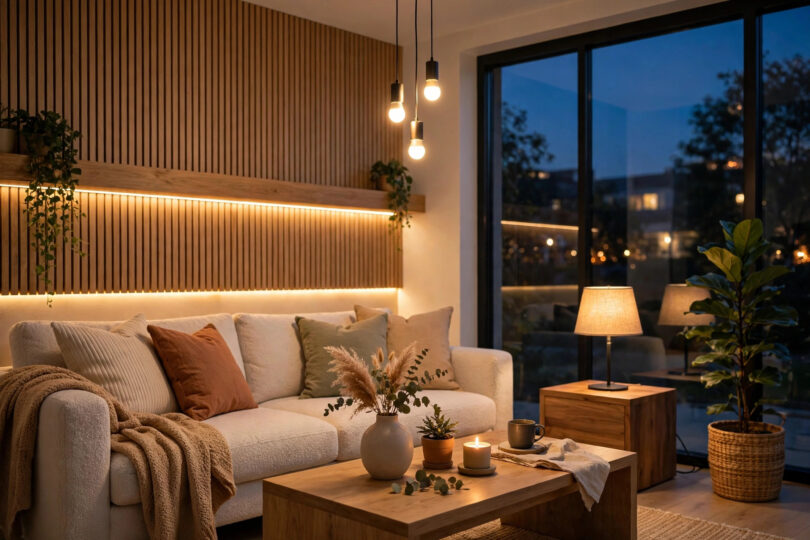
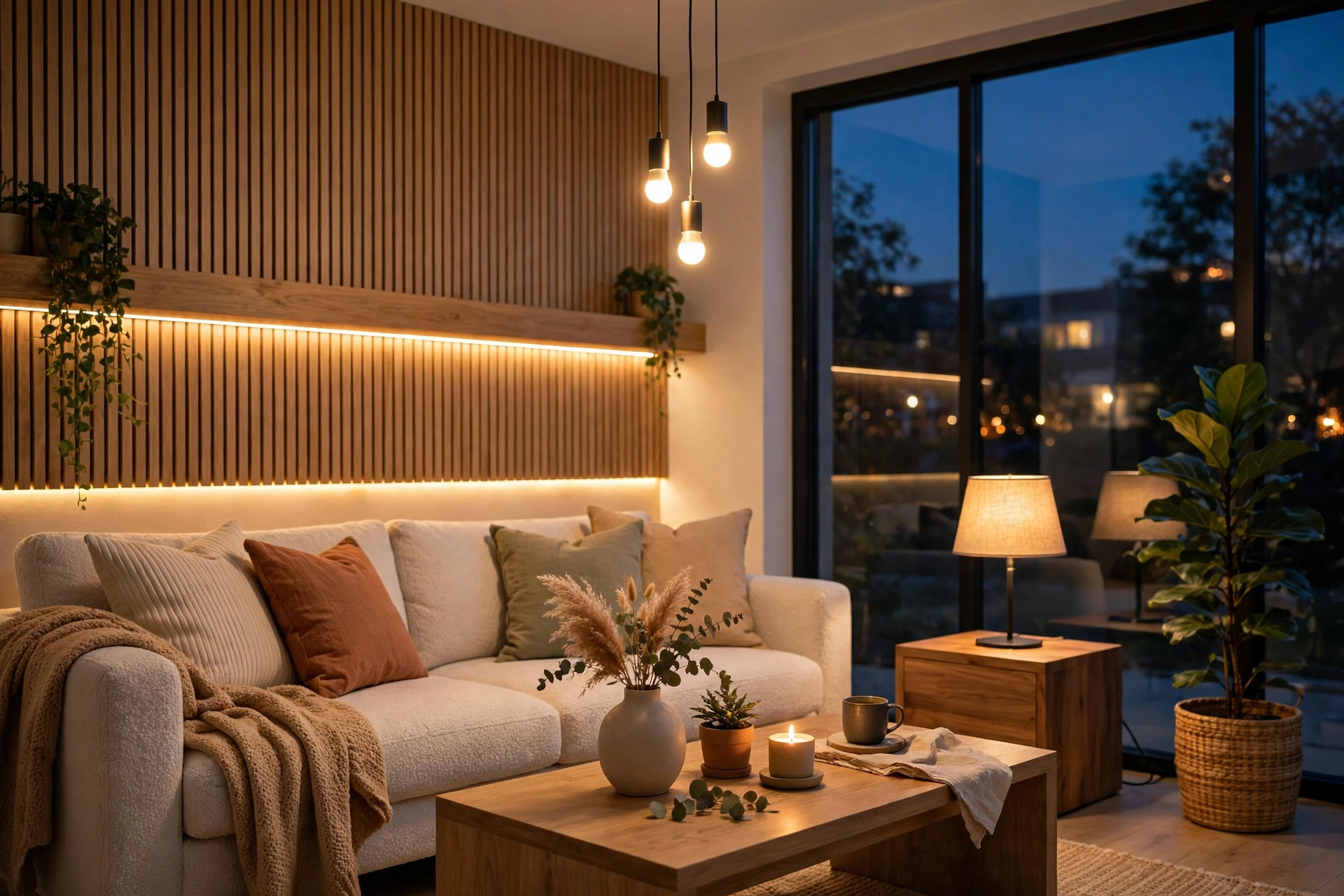
The living room is where smart lighting shines brightest, because the room serves so many purposes. Create scenes rather than thinking bulb by bulb. A movie scene might dim the main lights to twenty percent, switch off the lamp behind the television and leave a soft glow from a light strip behind the screen, which also reduces eye strain. A reading scene brings the lamp beside your chair to full brightness while keeping the rest of the room gentle. An entertaining scene uses warm, medium brightness everywhere so faces look good and the room feels sociable.
Colour-capable bulbs near artwork or shelving can add a subtle wash of colour for parties and celebrations, then return to warm white for everyday life. The secret is restraint: one or two accents look designed, while colour everywhere quickly feels like a nightclub.
Kitchen: Bright for Cooking, Warm for Dining
Kitchens need two kinds of light: bright, clear task light for chopping and cooking, and softer light for eating and relaxing. Smart home lighting ideas for the kitchen usually start with LED strips under the wall cabinets. Controlled by a motion sensor, they switch on as you approach the worktop, light your prep area perfectly, and turn off when you leave. Smart ceiling lights or downlights can shift from a crisp daylight tone in the morning to a warmer tone for dinner, and a voice command keeps control hands-free when your hands are covered in flour.
Bedrooms: Light That Helps You Sleep
In the bedroom, smart lighting can actively improve your rest. Wake-up routines gradually brighten the lights over twenty or thirty minutes, mimicking sunrise and making early mornings far less jarring, especially in winter. In the evening, a wind-down scene shifts bulbs to a warm, low glow that tells your body clock it is nearly time for sleep.
- Bedside lamps on smart plugs or bulbs: control both sides of the bed from one phone or a single voice command.
- Low-level night lighting: a motion-activated strip under the bed frame lights the floor gently if you get up at night, without waking a partner.
- Blackout-friendly control: schedule everything to switch off fully at bedtime, including standby glows that can disturb light sleepers.
Bathrooms, Hallways and Stairs
These in-between spaces benefit most from automation. Motion sensors in the hallway mean lights come on as you walk through with your hands full and switch off behind you. In the bathroom, a sensor-triggered low light is perfect for night-time visits, while a smart mirror light or brighter scene handles mornings. Stair lighting deserves special attention for safety: step lights or a sensor-controlled strip along the handrail can prevent falls, particularly for children and older relatives.
Much of this can be set up with simple routines rather than complex programming, and the practical advice in these home automation tips will help you build routines that trigger reliably and do not annoy the household.
Outdoor and Security Lighting
Outside the house, smart lighting combines welcome and security. A porch light that turns on at sunset and off at sunrise, path lights that brighten as someone approaches, and floodlights linked to a camera or motion sensor all discourage intruders while making your own arrivals safer. Scheduling outdoor lights to follow the natural sunset time, which most apps do automatically, means you never come home to a dark house in winter.
When you go on holiday, combine outdoor schedules with a lived-in pattern indoors: lights that switch on and off at slightly varied times in the evening look far more convincing than a single lamp on a timer.
Energy Saving and Control Tips
Smart lighting saves energy in three ways. LEDs use a fraction of the power of older bulbs, dimming reduces consumption further, and automation makes sure lights are never left on in empty rooms. Most apps show schedules and usage at a glance, so it is easy to spot a light that stays on all night in a spare room or garage.
Keep Control Simple for Everyone
The best smart home lighting ideas still respect the humble wall switch. Choose systems that work even when the internet is down, label scenes with names everyone understands, and keep physical controls available for guests, children and grandparents. Voice control is delightful, but a home that only its owner can operate is not a smart home at all. Start with the rooms you use most, build a handful of scenes you genuinely love, and expand gradually. Within a few weeks, ordinary switches will feel as outdated as getting up to change the television channel.