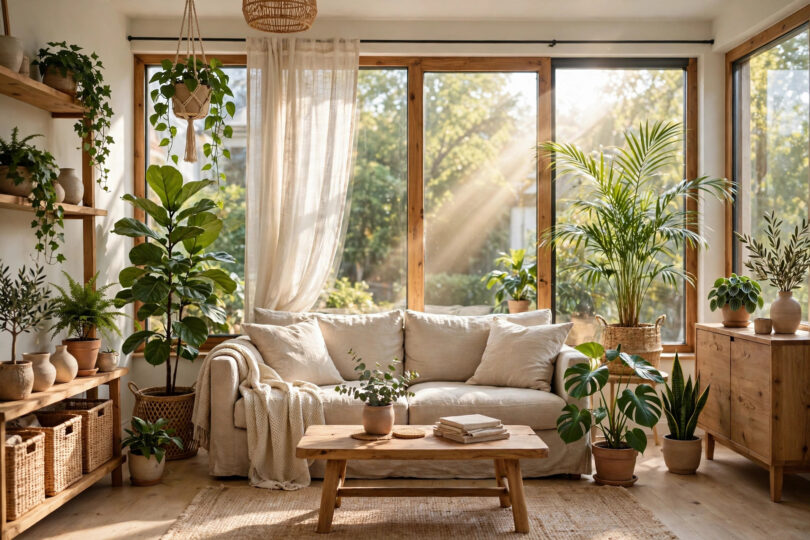

Step into a forest after rain and you immediately feel calmer: the air smells green, light filters through leaves, and your shoulders drop without you noticing. Biophilic interior design aims to bring that feeling indoors. Biophilic interior design is the practice of connecting people with nature inside their homes, using plants, natural light, organic materials, fresh air and views of the outdoors. It is more than adding a few houseplants, although plants help. Done properly, biophilic interior design changes how a room feels and even how you feel in it, with research linking nature-connected spaces to lower stress, better focus and deeper sleep. This guide explains the principles simply and shows how to apply them in any home, whatever your budget or floor space.
What Biophilic Design Really Means
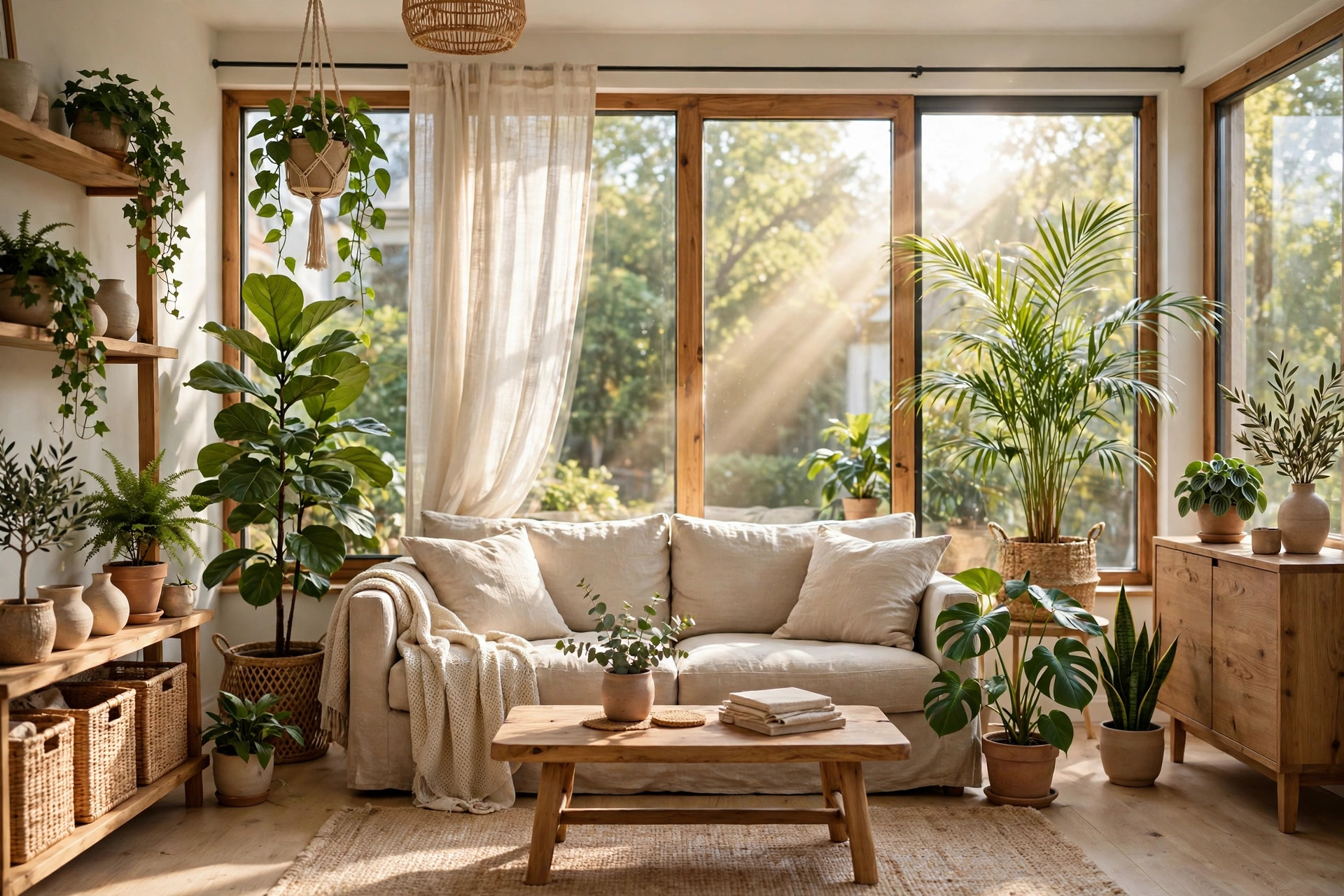
The word biophilia describes the human instinct to connect with nature, an instinct shaped over thousands of years of living outdoors. Modern life keeps us inside for around ninety percent of the day, often in rooms with artificial light, sealed windows and synthetic materials. Biophilic design corrects that imbalance by weaving nature back into the built environment. It works on three levels: direct nature, such as plants, daylight and fresh air; indirect nature, such as wood grain, stone textures and botanical patterns; and spatial nature, such as rooms that feel open, sheltered or connected to a view.
You do not need to rebuild your home to use these ideas. A room with a plant on the sill, a wooden table, daylight from a window and a view of a tree already contains several biophilic elements. The goal is to strengthen those connections deliberately rather than leaving them to chance. Start by noticing what nature your home already has, then add what is missing, one layer at a time, until the room feels less like a box and more like a habitat.
Plants: The Obvious Starting Point
Plants are the easiest and most rewarding entry into biophilic design. They add colour, soften hard lines, improve the feeling of air quality and give a room life that no object can match. Choose plants you can actually keep alive. Snake plants, pothos, ZZ plants and spider plants tolerate low light and irregular watering, while fiddle-leaf figs and calatheas reward more attentive owners. Group plants in odd numbers at different heights, on the floor, on shelves and hanging, to create a sense of abundance rather than a single lonely pot in a corner.
Think beyond pots on windowsills. A trailing plant on top of a bookshelf draws the eye upward and makes a ceiling feel higher. A large floor plant beside a sofa anchors a seating area the way a floor lamp does. Herbs on a kitchen sill are both decoration and ingredient. And if you have no light or no time, high-quality preserved moss walls or realistic faux plants still deliver much of the visual benefit, though they miss the living, growing quality that makes real plants special. The rule is simple: whatever you choose, keep it healthy and dust-free, because a dying plant sends the opposite message to a thriving one.
Light, Air and Views
Daylight is the most powerful biophilic tool you own and it costs nothing. Keep windows unobstructed where you can, use sheer curtains instead of heavy drapes, and place mirrors to bounce daylight deeper into a room. Arrange seating so you face a window or a view when possible, even a view of a street tree counts. If your home is dark, a light therapy lamp or a daylight-mimicking bulb in your main living space can help your body clock, especially in winter.
Fresh air matters too. Open windows for a few minutes each day, even in cold weather, to change the air and reconnect with outside sounds and smells. If you live somewhere noisy or polluted, an air purifier with a HEPA filter plus an open window at quieter times is a good compromise. Views of nature deserve protection: do not block your best window with a tall bookcase or a television. Frame the view instead, with low furniture and clear glass, so the outdoors becomes part of the room. This attention to light and outlook is a recurring theme in the latest modern interior design trends, where window seats and garden-facing layouts are increasingly prized.
Natural Materials and Organic Shapes
The second layer of biophilic design is indirect nature: materials and patterns that remind us of the outdoors even when we cannot see it. Solid wood, stone, rattan, linen, wool and clay all carry textures our hands and eyes recognise as natural. A wooden dining table with visible grain, a stone bathroom basin, linen curtains that move in a breeze, or a jute rug underfoot all add warmth that plastic and gloss laminate cannot replicate. You do not need to replace everything: a wooden chopping board left on display, a stone vase, or a wool throw over a sofa arm introduces natural texture into an otherwise modern room.
Shapes matter as much as materials. Nature rarely uses perfect straight lines, so curves, arches and irregular forms feel more organic and relaxing. An arched mirror, a round coffee table, a curved headboard, or a vase with an uneven handmade profile all soften a room. Botanical prints, leaf patterns and nature photography continue the theme on walls and textiles, but use them with restraint. One strong botanical artwork beats a room full of competing leaf prints, and real plants nearby will always do more than pictures of plants.
Water, Sound and Scent
The subtler senses are often forgotten in interior design, yet they are powerful biophilic triggers. The sound of running water, birdsong from an open window, or a small indoor fountain can make a room feel alive and calm. You do not need a fountain: a playlist of natural sounds during a morning routine, or simply opening a window to hear the garden, works just as well. Scent is equally effective. Fresh flowers, a bowl of citrus, cedarwood, eucalyptus or pine-scented candles, and herbs like rosemary and lavender on a sill all bring the outdoors in through smell.
Water features deserve a note of caution. A small tabletop fountain can be lovely, but only if you will clean it regularly; stagnant water quickly becomes a chore rather than a pleasure. For most homes, a beautiful glass carafe of water with fresh mint, a bathroom with a rain showerhead, or a kitchen tap that filters well is enough to bring the element of water into daily rituals. The aim is gentle, everyday contact with nature, not a theme park.
Biophilic Design in Every Room
In the living room, prioritise a view, a large plant, natural textiles and layered daylight. In the bedroom, plants that tolerate low light, linen bedding, wooden furniture and blackout-free mornings all support better sleep. In the kitchen, herbs, wooden boards, stone surfaces and a window over the sink turn chores into a connection with the outdoors. In the bathroom, humidity-loving plants like ferns and orchids thrive, and natural stone and wood accessories create a spa-like calm. Even a hallway benefits: a runner in a natural fibre, a mirror reflecting a plant, and daylight from a fanlight all count.
Small spaces are no barrier. A single hanging planter, a wooden shelf, a daylight bulb and a nature photograph can transform a studio flat. Balconies and windowsills are biophilic gold: a window box of herbs or flowers gives you a living view from inside and a reason to open the window. If you want a more ambitious example of how nature and luxury can combine, the luxury interior ideas on this site show how high-end homes use gardens, courtyards and natural stone to blur the line between inside and out, and many of those ideas scale down beautifully to ordinary rooms.
Conclusion
Biophilic interior design is not a style you buy, it is a relationship you build between your home and the natural world. Start with plants you can keep alive, maximise daylight and fresh air, add natural materials and organic shapes, and engage your senses with scent and sound. Layer by layer, your home will feel calmer, healthier and more alive, and you will wonder how you ever lived in a room that felt like a sealed box.